Abiu
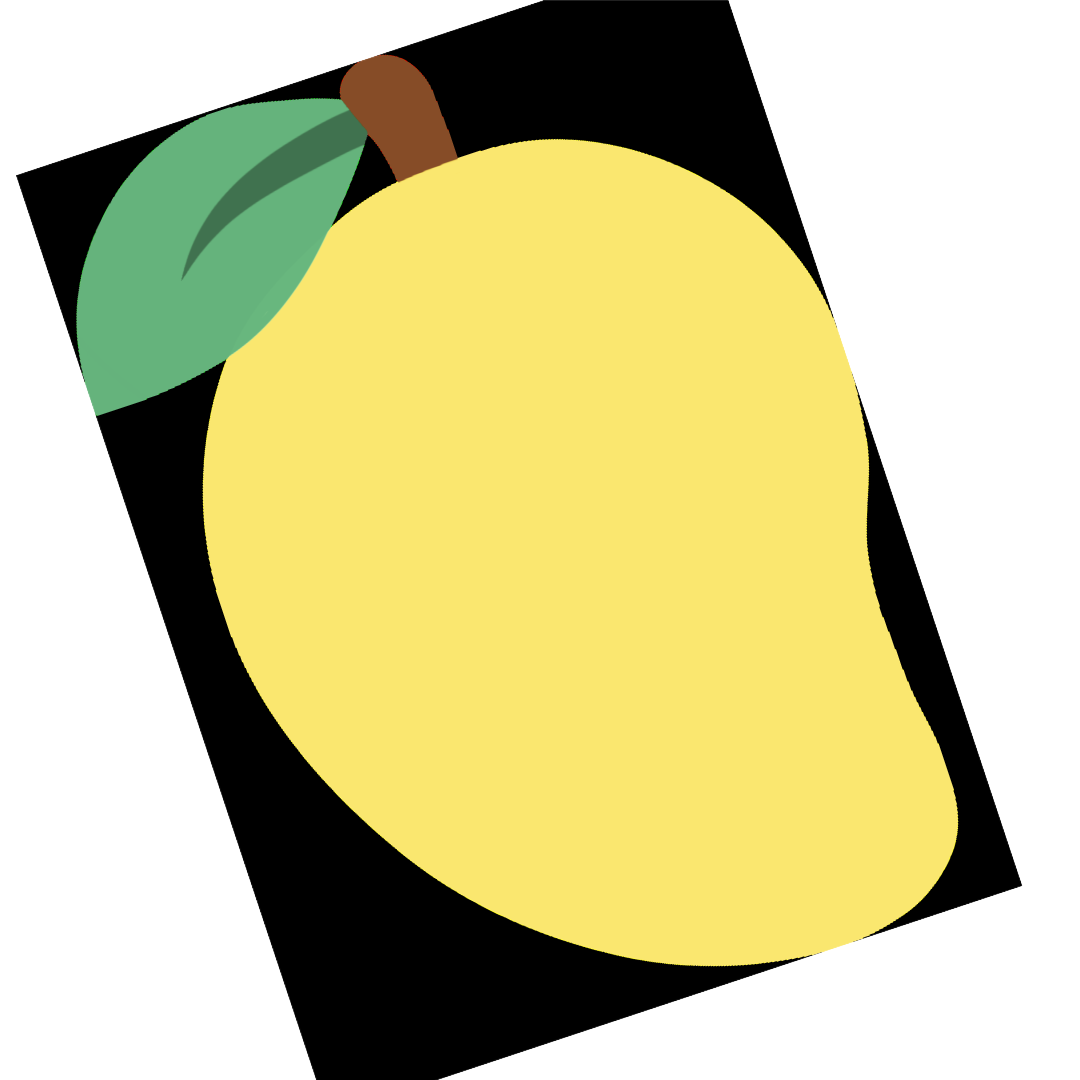
The fruit (berry) is oval or ellipsoidal, with smooth, thin, bright-yellow skin when ripe, and has a pointed tip at the end. The pulp is translucent, gelatinous, very sweet, and aromatic, with a few dark seeds. It is rich in Pro-Vitamin A (carotenoids), Vitamin C, and contains a latex that is less present in the ripe fruit but slightly astringes the mouth.
Plant name
Abiueiro
Family
Sapotaceae
Scientific name
Pouteria caimito (Ruiz & Pav.) Radlk.
Primary scientific name for the Abiu tree.
Pouteria lucuma
Related species, Lucuma.
About the fruit
The abiu is the fruit of the abiu tree (Pouteria caimito), a tree native to the Amazon region and the tropical forests of South America.
The fruit is botanically a berry and is appreciated for its gelatinous and transparent pulp, with a flavor that resembles caramel pudding in some varieties.
It is valued for its high content of carotenoids (Pro-Vitamin A) and for its use in ice creams, sweets, and fresh consumption.
The latex (white sap) present in the immature fruit is astringent; therefore, the abiu should only be consumed when it is fully ripe (bright yellow skin).
Leaves
The evergreen leaves and the latex produced by the abiu tree are characteristics of the Sapotaceae family, which includes sapodilla and guaraná (although guaraná belongs to the Sapindaceae family).
The leaf extract is used in folk medicine for the treatment of fevers, inflammations, and as an astringent.
The dense foliage of the abiu tree provides shade and is useful in agroforestry systems, where the shade is used to protect other crops.
Stem
The stem features moderately dense wood, rich in latex, a common characteristic in Sapotaceae.
Latex production acts as a defense against insects and pathogens, in addition to assisting in the healing of wounds.
Growth is relatively slow, with good adaptation to humid tropical environments and deep soils.
Roots
The deep taproot of the abiu tree allows it to grow in soils of low fertility and explore underground water resources, granting great resistance to drought.
The tree has a slow development and can take several years to start fruiting, but it is very long-lived.
The abiu tree is hardy and widely used in street landscaping in tropical regions.
Seeds
The seed has thick cotyledons and nutrient reserves that ensure vigorous germination.
It does not tolerate intense desiccation, showing behavior close to that of recalcitrant seeds.
Propagation by seeds is common, but selected cultivars can be reproduced by grafting to standardize the flavor, size, and productivity of the fruits.
Flowers
The flowering of the abiu tree is intermittent, allowing the harvest of fruits at different times of the year, which is a commercial advantage.
Efficient pollination by insects ensures the development of large and well-formed fruits.
Self-pollination is common, which simplifies management in orchards.
Benefits
High Pro-Vitamin A Content
Rich in carotenoids (which give the yellow color), essential for eye health, the immune system, and skin.
Digestive Health
It is a source of fibers that help with digestion and the regulation of intestinal transit.
Source of Vitamin C
Contributes to the immune system and acts as an antioxidant.
Rich in Minerals
Good source of Potassium, Phosphorus, and Calcium, important for bone health and cellular function.
Antioxidant Potential
Contains phenolic compounds in the skin and pulp that protect against oxidative stress.
Curiosities
Amazonian Origin
The fruit is native to the Amazon and Peru and is known for its flavor that resembles "pudding."
Latex Content
The pulp of the immature abiu contains latex, which should be removed or avoided, as it causes a mouth-puckering sensation.
Botanical Relative
The abiu is a close relative of the Lucuma (Pouteria lucuma), an Andean fruit known as the gold egg.
Traditional Medicine
Abiu seeds are used in traditional medicine to relieve coughs and bronchitis in some regions.
Tree Resilience
The tree is very resistant and can be cultivated at various altitudes.
References
- 1.Embrapa (Brazilian Agricultural Research Corporation). Abiu (Pouteria caimito): Production and Characteristics. 2017. (Plant structure, cultivation, and latex).
- 2.Brazilian Journal of Fruit Culture. Physico-chemical composition of abiu fruits. 2019. (Carotenoids, Vitamin C, and sugars).
- 3.Journal of Agricultural and Food Chemistry. Evaluation of antioxidant and anti-inflammatory properties of Pouteria caimito extracts. 2021. (Phenolic compounds).
- 4.Acta Horticulturae (ISHS). Flowering and fruit development in Pouteria caimito. 2016. (Floral biology and pollination).
- 5.TACO (Brazilian Table of Food Composition). Abiu, raw. University of Campinas (UNICAMP). (Nutritional data).
- 6.Lorenzi, H.; Bacher, L.; Lacerda, M.T.C.; Sartori, S.. Brazilian and Exotic Cultivated Fruits. Instituto Plantarum, 2015 — section on Pouteria caimito.
- 7.Pennington, T.D.. The Genus Pouteria (Sapotaceae): Flora Neotropica Monograph. NYBG Press, 1990.
- 8.Embrapa Western Amazon. Abieiro: Botany, Propagation, and Cultivation.
- 9.