Constipation: How Fruit Can Help Regulate Your Rhythm
by Marcus Rodrigues

Constipation: How Fruit Can Help Regulate Your Rhythm
Constipation—the well-known “blocked gut”—goes far beyond simple discomfort. It affects quality of life, mood, and even nutrient absorption.
And although the classic advice is “eat more fiber,” the reality is a bit more complex. Proper bowel function depends on a combination of factors: type of fiber, hydration, movement, and even specific compounds found in certain fruits.
Not All Fiber Works the Same (and That Changes Everything)
When we talk about fiber, there are two main types—and understanding the difference completely changes the strategy.
Insoluble fiber, found mainly in peels and seeds, increases stool bulk and speeds up intestinal transit. It works almost like a “broom,” stimulating movement.
Soluble fiber, found in fruit pulp, absorbs water and forms a gel. This softens stool and feeds beneficial gut bacteria.
The key point here is balance: a well-regulated gut needs both types working together.
Some Fruits Go Beyond Fiber
Beyond fiber, some fruits contain compounds that directly support bowel function.
Prunes, for example, contain sorbitol—a sugar alcohol with an osmotic effect that draws water into the intestines, making elimination easier.
Papaya contains papain, an enzyme that aids digestion and supports smoother transit.
Kiwi combines fiber with actinidin, improving both digestion and bowel movement frequency.
And fruits like oranges and tangerines hide their greatest benefit in the pulp—exactly where the most important fibers are.
So it’s not just about “eating fruit,” but knowing which ones and how to consume them.
How to Eat for Real Results
How you consume fruit makes all the difference.
Whenever possible, choose fruits in their whole form and with the peel. Removing the peel or straining juice eliminates the very fibers that support digestion.
In practical terms, consuming 3 to 5 servings per day is usually enough to see results. For dried prunes, around 5 units per day can already have a noticeable effect.
Strained juices, on the other hand, have little impact—if you prefer something drinkable, go for whole versions like smoothies.
What Almost No One Does (But Should): Observe Your Body
One of the simplest—and most overlooked—habits is observing your own stool.
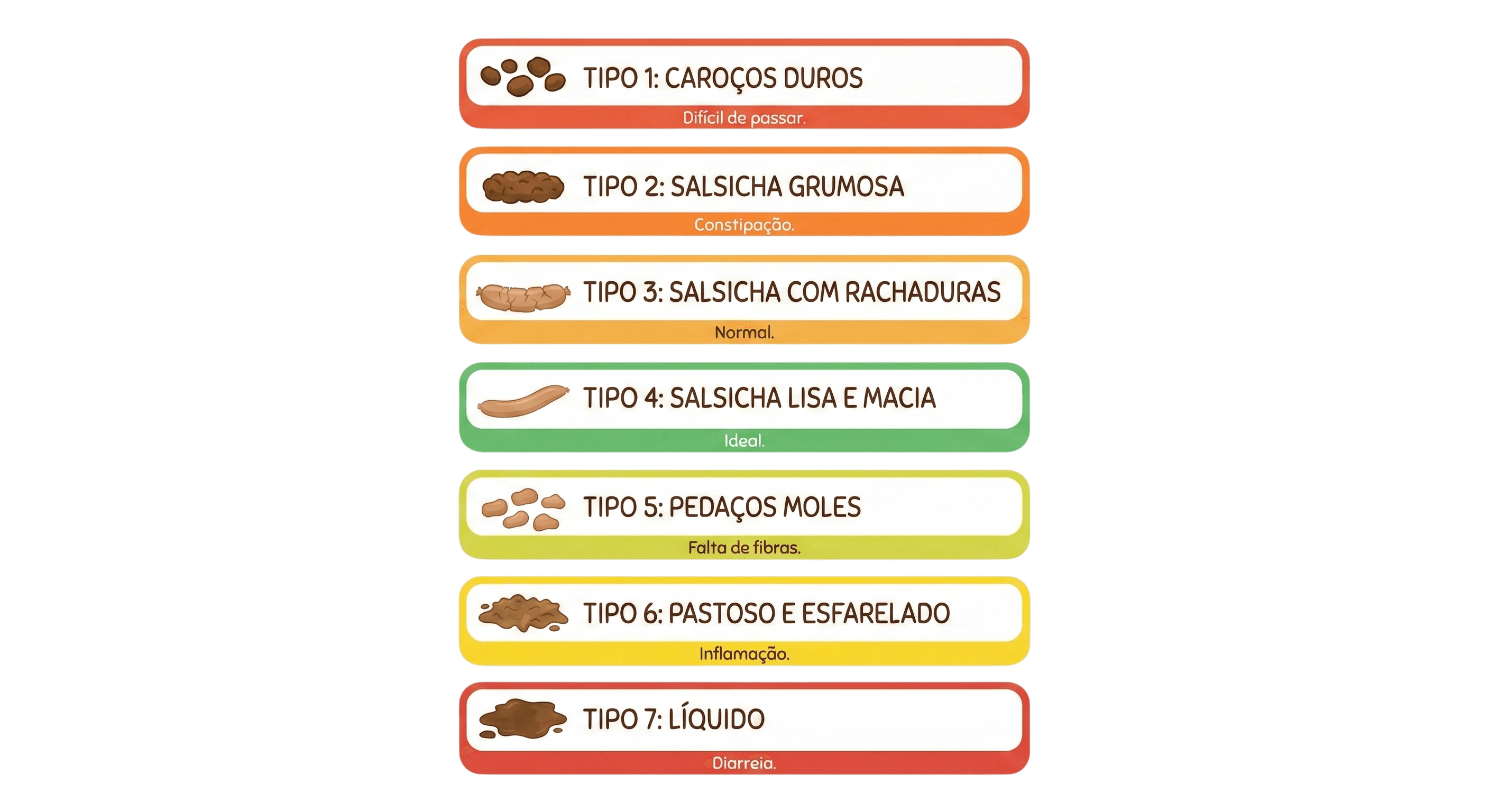
The Bristol Stool Scale classifies stool shape and consistency into seven types, ranging from hard lumps (constipation) to diarrhea. The ideal is in the middle: a smooth, sausage-like shape that’s easy to pass.
It may feel unusual at first, but this works as direct feedback from your body. Small adjustments in diet and hydration show up here quickly.
Without Water and Movement, Nothing Works Properly
Fiber without water can actually make things worse.
It needs hydration to form proper volume and texture. Without it, the effect may be the opposite: even harder stools.
Additionally, the body needs movement. Physical activity mechanically stimulates the intestines, improving peristalsis and regularity.
When It’s Not Just About Diet
In most cases, simple adjustments solve the issue. But some signs require attention.
Persistent changes in bowel habits, blood in stool, intense abdominal pain, or frequent use of laxatives are important warning signs and should be evaluated by a professional.
To Remember
A regulated gut doesn’t depend on a single food—it depends on a system working together.
📍 Using Fruit Map to find fresh fruit can make this easier in daily life, ensuring variety and access to quality fiber.
Regulating your gut isn’t about forcing your body—it’s about giving it the right conditions to function.
References:
ATTALURI, A. et al. Randomised clinical trial: dried plums (prunes) vs. psyllium for constipation. Alimentary Pharmacology & Therapeutics, 2011;
BRASIL. Ministry of Health. Dietary Guidelines for the Brazilian Population. 2nd ed., 2014;
EADY, S. L. et al. Effect of green kiwifruit on digestive function in healthy and constipated individuals. Journal of Nutritional Science, 2019;
MAHAN, L. K.; RAYMOND, J. L. Krause’s Food & the Nutrition Care Process. 14th ed., 2018;
NEPA/UNICAMP. Brazilian Food Composition Table (TACO), 2011;
WORLD GASTROENTEROLOGY ORGANISATION (WGO). Global Guideline: Constipation, 2010;
MARTINEZ, A. P.; CASSOLARI, A. C. P. Bristol Stool Scale: translation and validation into Portuguese. Revista Latino-Americana de Enfermagem, 2012.