From India to the Brazilian Table
by Felipe Brito
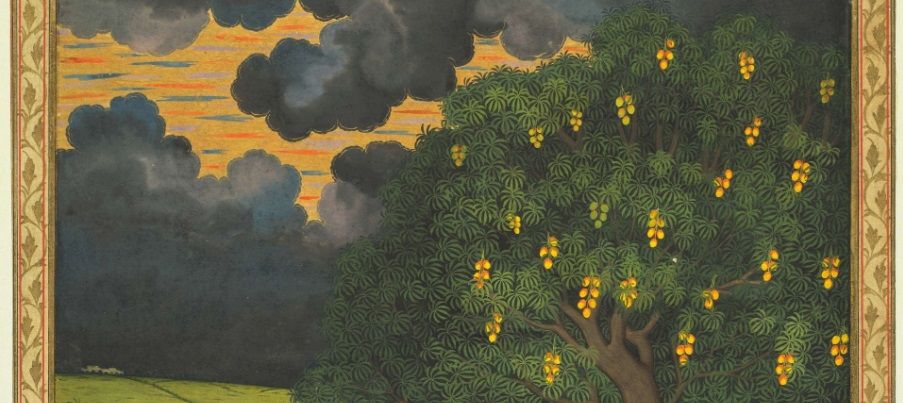
From India to the Brazilian Table
A very popular fruit present on Brazilian tables, the mango tree is so embedded in our cuisine that it is almost impossible to think of a fruit in national gastronomy without considering it. In fact, it originates from India and the rest of Southeast Asia. Its spread across the world was so extensive that it reached Brazil, becoming the first place in the Americas to cultivate mangoes, starting in the 16th century.
- Painting by Sita Ram (1814).
Its cultivation was initially concentrated in the state of São Paulo, from where other mango varieties were disseminated to the rest of Brazil. Over the decades, with advances in agricultural techniques, production expanded to other regions. Between the 1970s and 1980s, the Northeast began to concentrate the largest share of production, especially in the São Francisco Valley region, which offers ideal climatic conditions such as high solar incidence, low humidity, and the availability of irrigation. This combination favored intensive, technified production aimed at both domestic markets and exports.
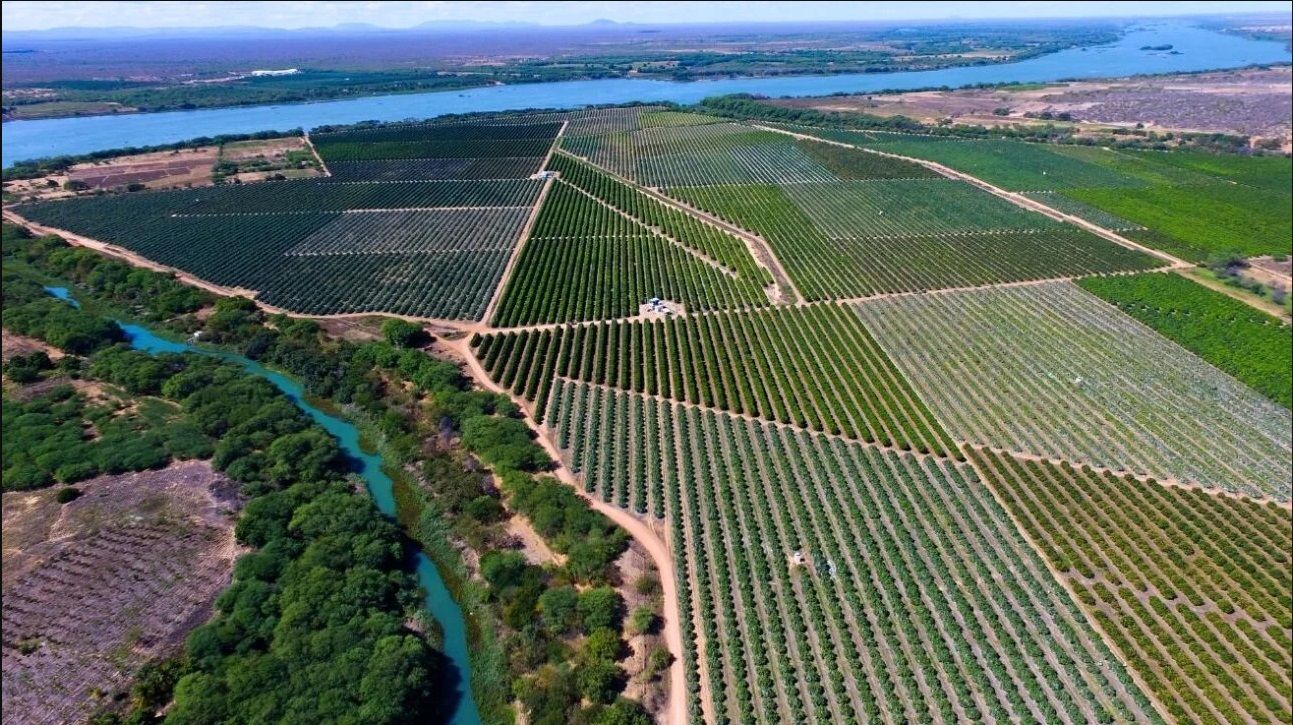
- Mango plantation in the São Francisco Valley.
Currently, Brazil ranks among the world’s largest mango producers, with states such as Bahia, Pernambuco, and São Paulo standing out. The São Francisco Valley region, in particular, has become one of the main export hubs, supplying demanding markets such as Europe and the United States. This growth is directly linked to investments in technology, efficient management, and the selection of varieties adapted to commercial demands.
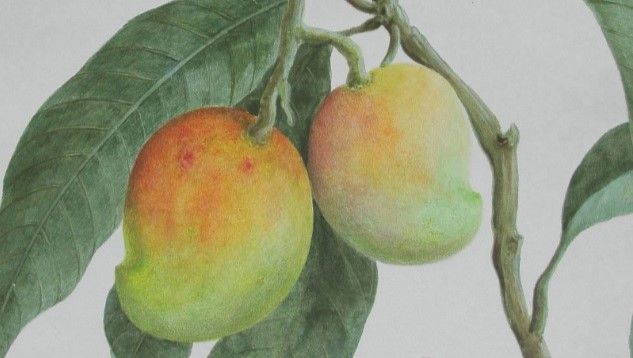
However, despite its Eastern origin, selected specimens from Florida have become very common in the Brazilian diet due to several factors, such as pest resistance, higher productivity, fruit standardization, and strong export potential. Among these varieties, the Tommy Atkins mango (Mangifera indica) stands out, being widely cultivated in the country due to its post-harvest durability and resistance to transport—essential characteristics for large-scale trade. Other varieties have also gained space, such as Palmer, Kent, and Keitt, known for their lower fiber content and sweeter taste.
In addition to its economic importance, mango also has significant nutritional value. Rich in vitamins A and C, antioxidants, and fiber, it contributes to strengthening the immune system, improving digestion, and maintaining skin health. Its regular consumption is associated with a balanced and healthy diet, further reinforcing its presence in Brazilian eating habits.
Currently, mango is consumed fresh and can be enjoyed on its own or as an addition to salads, desserts, and sweet-and-savory dishes. It is also widely used in the production of juices, frozen pulps, jams, and sweets. In recent years, new forms of consumption have gained prominence, such as dried mango, powdered mango, or its incorporation into processed products, adding nutritional value and expanding its possibilities in the food market.
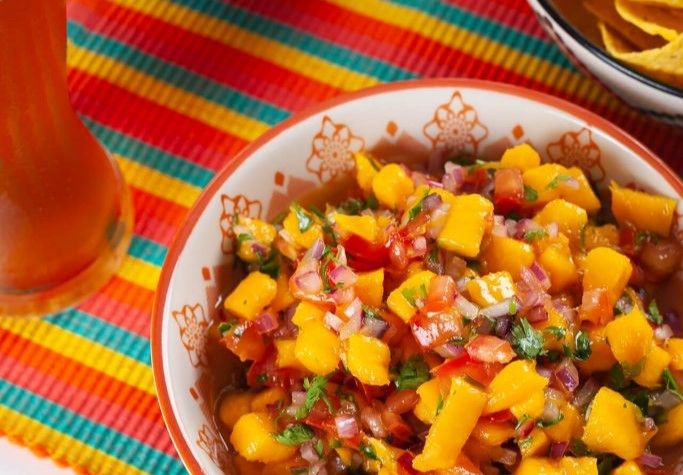
- Mango salsa.
Thus, mango is not only a traditional fruit but also a dynamic product within the agri-food chain, with great potential for innovation, added value, and expansion both in Brazil and internationally.
References:
- BRASIL. Ministério da Agricultura e Pecuária. Vale do São Francisco vai exportar mangas para a Coreia do Sul. Brasília, 2016 (atualizado em 2025).
- DONADIO, Luiz Carlos (org.). Variedades brasileiras de manga. São Paulo: Editora Unesp, 2001.
- LIMA, J. R. F. de et al. Análise do mercado de manga produzida no Vale do São Francisco: cenário atual e perspectivas para o curto prazo. In: CONGRESSO DA SOBER NORDESTE, 13., 2018, Juazeiro. Anais [...]. Juazeiro: UNIVASF, 2018.
- LOBATO, Giselly Martins. Recursos genéticos e melhoramento da mangueira no Brasil. 2023. 38 f. Trabalho de Conclusão de Curso (Graduação em Agronomia) – Universidade Federal do Maranhão, Centro de Ciências de Chapadinha, Chapadinha, 2023.
- PHILIPPI, Sonia Tucunduva. Tabela de composição de alimentos: suporte para decisão nutricional. 2. ed. São Paulo: Manole, 2002.