Fruit vs. Supplements
by Marcus Rodrigues
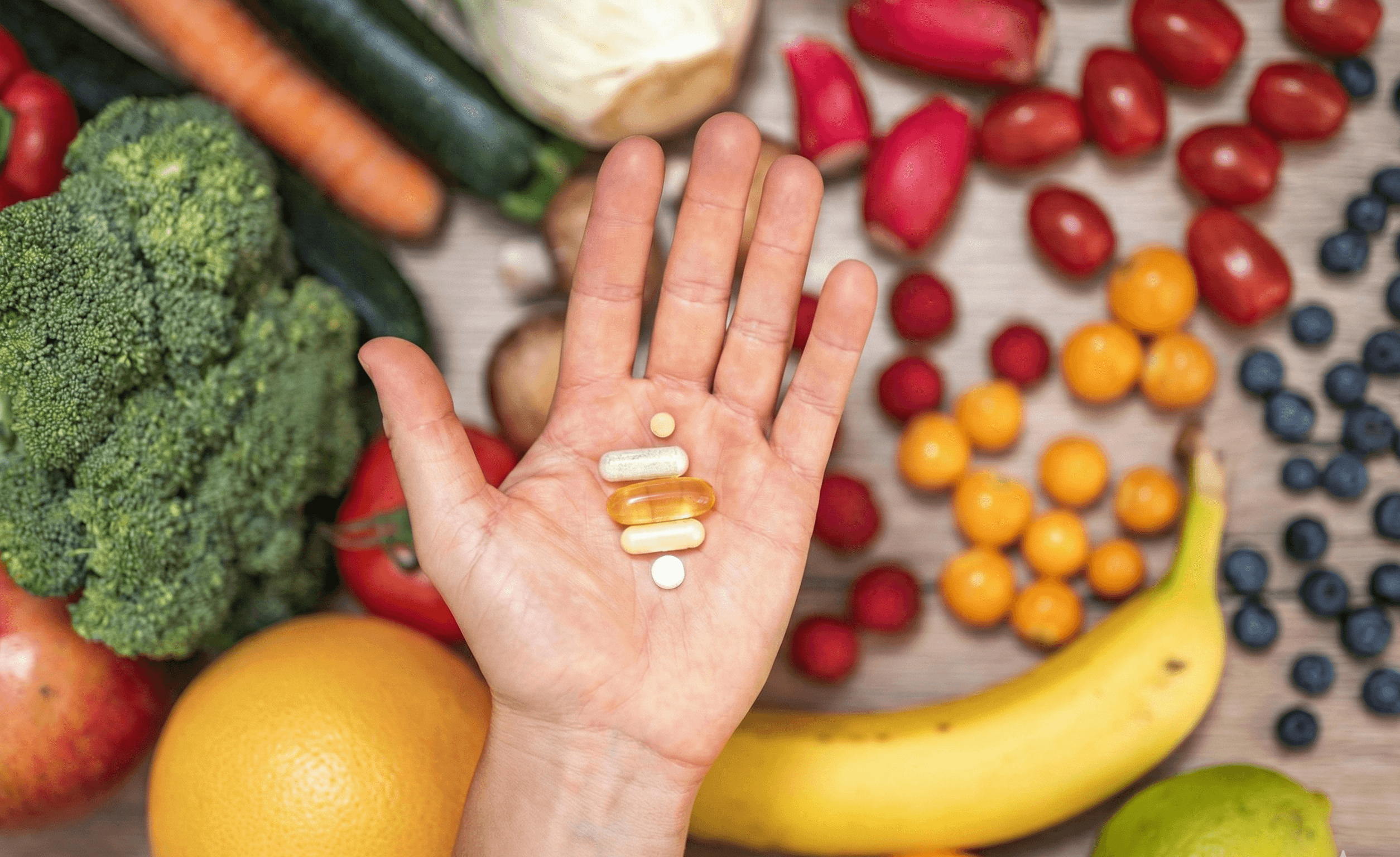
Why Fruit Is More Powerful Than Supplements
When we think about health, we often focus only on numbers: milligrams of vitamins, grams of fiber, ideal doses. But modern nutrition shows that what matters most is not the isolated nutrient—it’s the context in which it exists.
This is known as the Matrix Effect.
In practice, it means that whole foods function as intelligent systems, where fibers, vitamins, minerals, and bioactive compounds interact with each other. It’s this natural organization that allows fruit to deliver benefits no supplement can fully replicate.
It’s Not About Isolated Nutrients—It’s About Interaction
Inside a fruit, nutrients don’t work alone.
There is a true food synergy, where each component enhances the function of the others. Vitamins improve mineral absorption, antioxidants protect cellular structures, and fiber regulates the pace of everything.
On top of that, the fruit’s structure itself acts as a controlled-release system. Instead of a rapid spike in absorption, the body receives nutrients gradually, in line with its capacity to process them.
This prevents waste and reduces unnecessary metabolic overload.
Acerola Makes This Clear

A single acerola can contain between 100 mg and 150 mg of vitamin C—enough to meet (or even exceed) an adult’s daily requirement.
Now compare that to a typical 1g (1000 mg) supplement.
The body does not absorb all of it efficiently. Part of that dose saturates absorption mechanisms and ends up being excreted. In fruit, however, vitamin C comes alongside flavonoids and other compounds that enhance its effect and improve its bioavailability.
It’s not just the amount—it’s how it’s delivered.
When Excess Gets in the Way Instead of Helping
Another important factor is bioaccessibility, meaning how much of a nutrient can actually be absorbed by the body.
In high-dose supplements, nutrients can compete with each other, using the same absorption pathways. This can reduce overall efficiency.
In fruit, this doesn’t happen in the same way. Nutrients are organized within a complex biological structure that digestion gradually breaks down, releasing each component at the right time.
The result is more balanced and efficient absorption.
In the End, Nature Already Solved the Problem
The point here isn’t to demonize supplements—they have their place in specific clinical situations.
But as a foundation for health, the logic is simple: whole foods always deliver more than the sum of their isolated nutrients.
📍 By using Fruit Map to find fresh fruit, you’re not just choosing what to eat—you’re accessing this complete nutrient matrix at its optimal state.
To Remember
More nutrients don’t always mean more benefits.
What matters isn’t just what you consume, but how it reaches your body.
References:
AGUILERA, J. M. The food matrix: implications in processing, nutrition and health. Critical Reviews in Food Science and Nutrition, 2019;
FARDET, A. The food matrix effect: A new empirical paradigm to protect human health and food systems. Frontiers in Nutrition, 2023;
JACOBS, D. R.; TAPSELL, L. C. Food, not nutrients, is the fundamental unit in nutrition. Nutrition Reviews, 2007;
PRAKASH, A.; BASKHARAN, R. Acerola, an untapped functional fruit: a review on latest frontiers. Journal of Food Science and Technology, 2018.