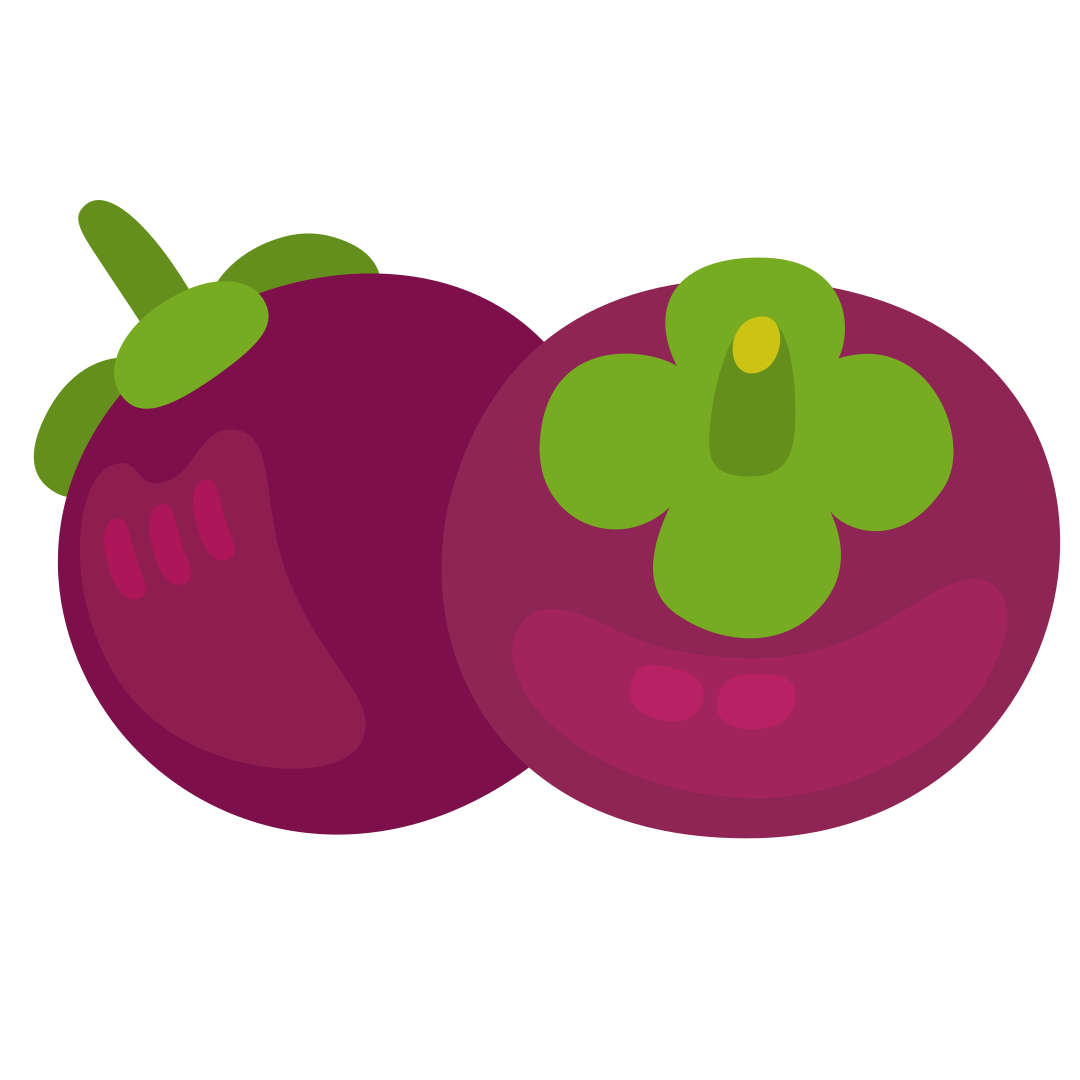
Araticum
Large, globose to ovoid fruit (10–15 cm). Thick, green to brown, rough peel with conical protrusions. Edible white or yellowish pulp, juicy and fibrous, with large, dark seeds. Sweet, slightly acidic flavor, highly aromatic and fragrant. Excellent source of fiber, potassium, and vitamins C and B2.
Plant name
Araticunzeiro
Family
Annonaceae
Scientific name
Annona crassiflora Mart.
Scientific name for the Araticum tree.
Annona muricata L.
Related species, commonly known as Soursop (Graviola).
Annona coriacea Mart.
Related species, commonly known as Araticum-do-campo.
About the fruit
The Araticum (Annona crassiflora) is one of the most important native fruits of the Brazilian Cerrado. The maturation of the fruit is slow (about one year) and the fruit only ripens completely on the plant. The pulp is consumed fresh and widely used in the production of ice creams, liqueurs, and sweets. The seeds and the bark are rich in bioactive compounds.
Leaves
The falling of leaves in the dry season is a defense mechanism of the plant against excessive water loss. Extracts of the araticum tree leaf are studied due to the presence of alkaloids (such as annonacin) and acetogenins, which demonstrate pharmacological potential, including insecticidal and cytotoxic activities.
Stem
The characteristic of the thick and suberous (cork-like) bark is a botanical adaptation (called pyrophily) that gives the trunk of the araticum a high resistance to seasonal fire, common in the Cerrado, protecting the vascular cambium. The wood is of medium to low density and has no significant commercial use due to the size and tortuous shape of the trunk. Extracts of the bark and trunk leaves are studied for containing annonaceous acetogenins and other alkaloids, which present potential pharmacological interest, such as cytotoxic and anti-inflammatory activities.
Roots
The depth of the taproot is what allows the araticum tree to survive the surface fires of the Cerrado and the long periods of drought, a characteristic of great botanical resilience. The slow development of the seedling reflects the energy spent in establishing the deep root system.
Seeds
The seed (Annona crassiflora) has a hard tegument that induces seed dormancy, requiring scarification treatment (physical or chemical) to optimize germination in nurseries. The seed embryo is straight, and the propagation of the species is predominantly done by seeds or grafting. Academically, the seeds and their extracts are a focus of research due to the presence of acetogenins (bioactive substances found in the Annonaceae family), which are investigated for their insecticidal potential and, in preliminary studies, for cytotoxic activities. The seed oil is rich in fatty acids, but consumption of the seed fresh is not recommended due to the presence of alkaloids.
Flowers
The pollination system by beetles is specialized: the beetle enters the flower at the female stage, is trapped temporarily, collects the pollen when the flower transitions to the male stage, and carries it to a new flower in the female stage, ensuring fertilization.
Benefits
Rich in Carbohydrates
Good source of energy.
High Fiber Content
Promotes digestive health and intestinal transit.
Source of B-Complex Vitamins
Especially B2 (Riboflavin), important for energy metabolism.
Antioxidant Potential
Contains phenolic compounds and flavonoids.
Bioactive Compounds
Seeds and bark are rich in acetogenins, a class of compounds that has been the object of intense research due to its cytotoxic potential (in vitro tests).
Curiosities
Cerrado Symbol
The Araticum is one of the Cerrado fruits with the greatest economic potential and is a symbol of this biome.
Regional Gastronomy
The pulp of the araticum is highly valued in the preparation of regional ice cream, known as "araticum ice cream."
Seed Toxicity
The seeds are considered toxic if ingested in large quantities due to the presence of alkaloids and acetogenins.
Botanical Nickname
The fruit is frequently called "Anona" due to its botanical genus, Annona.
References
- 1.Revista Brasileira de Fruticultura. Caracterização físico-química de frutos de araticum (Annona crassiflora) do Cerrado Mineiro. 2015. (Composition and quality of the fruit).
- 2.Food Research International. Chemical composition, antioxidant and antimicrobial activities of Annona crassiflora pulp and seed extracts. 2017. (Antioxidant and antimicrobial activity).
- 3.Scientia Horticulturae. Pollination ecology and reproductive biology of Annona crassiflora Mart. (Annonaceae). 2012. (Ecology and reproductive biology).
- 4.Pesquisa Agropecuária Brasileira. Araticum (Annona crassiflora): Aspectos Agronômicos e Utilização. 2010. (Agronomic aspects and use).
- 5.Journal of Natural Products. Acetogenins from the seeds of Annona crassiflora. 2008. (Study of acetogenins in seeds).
- 6.Vieira, R. F. (2001). Caracterização morfológica, propagação e aspectos fitossanitários do araticum (Annona crassiflora Mart.). Pesquisa Agropecuária Brasileira, 36(10), 1279-1288. (Study on seed morphology and propagation).
- 7.Ramos, T. M. L. et al. (2018). Atividade Antioxidante e Teor de Compostos Fenólicos de Extratos da Casca do Araticum (Annona crassiflora Mart.). Revista Brasileira de Tecnologia Agroindustrial, 12(2), 2530-2542. (Study focused on the bark/stem).