Fig
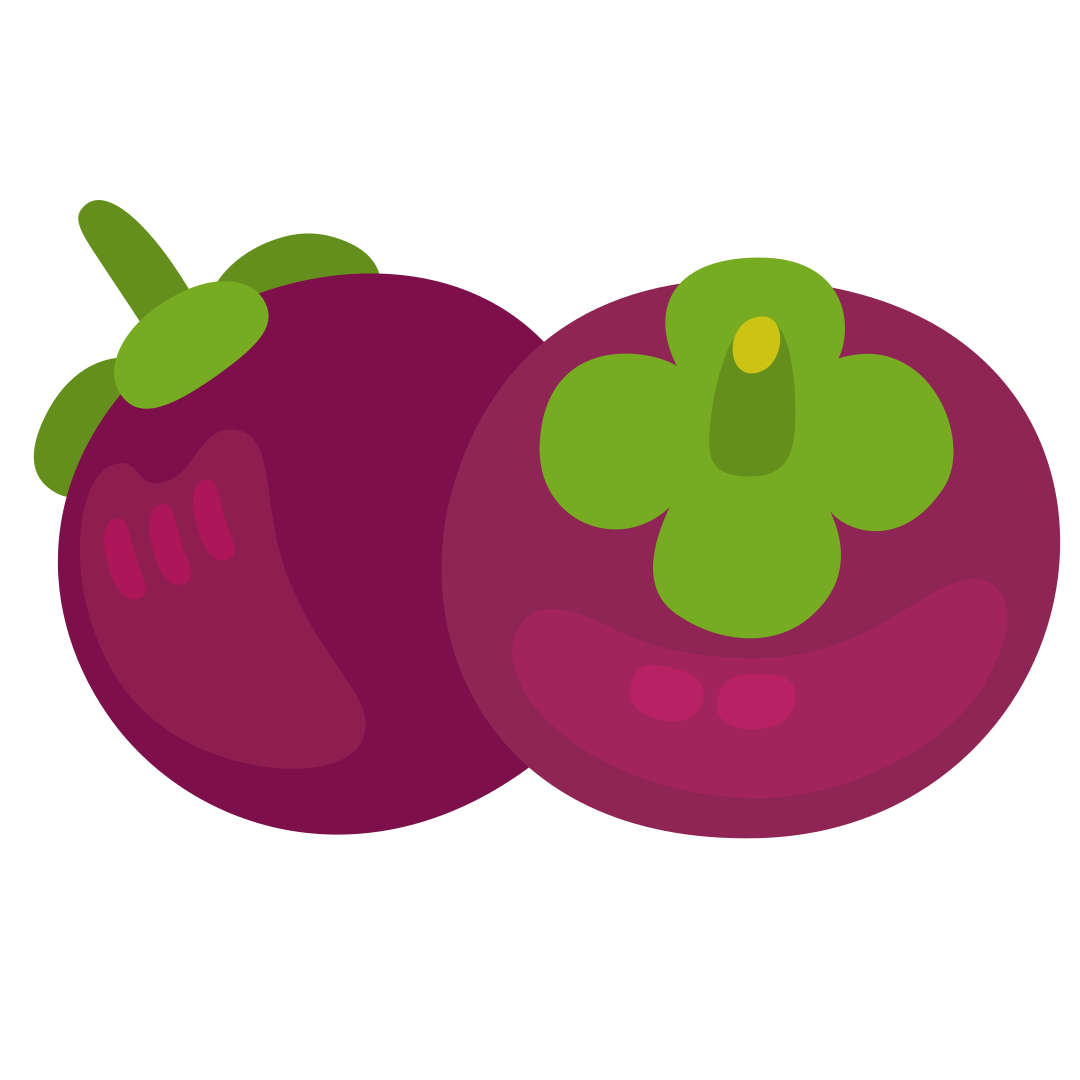
The fruit is a syconium (an inverted fleshy structure that contains the flowers and true fruits). It is pyriform (pear-shaped), with thin skin and coloring that ranges from green to dark purple, with soft, sweet internal pulp and many tiny seeds (the true fruits, achenes). It is notable for its very high content of Fibers (mainly in the dried form), Potassium, and phenolic compounds.
Plant name
Figueira
Family
Moraceae
Scientific name
Ficus carica L.
Scientific name for the Common Fig tree.
Ficus sycomorus L.
Related species, commonly known as the Sycamore Fig.
About the fruit
Large, deciduous leaves (fall in winter), lobed (with 3 to 5 cutouts), with wavy margins and a rough texture. They are dark green in color. The fig tree is a temperate to subtropical climate tree that loses its leaves in winter to enter dormancy, a crucial process for fruiting. The fig sap (latex) is irritating.
Leaves
The large and lobed leaves of the fig tree are a symbol of Mediterranean culture.
The latex (white sap) produced by the fig tree, when in contact with the skin, can cause phytophotodermatitis (irritation and burn when exposed to the sun), due to compounds such as furanocoumarins.
In phytotherapy, fig leaf tea has been studied for its hypoglycemic activity (helps lower blood sugar).
Stem
The stem is rich in latex, composed of enzymes and irritating substances that act as a defense against herbivory.
The open and spreading architecture of the fig tree favors wide light interception and the production of syconia along the branches.
Young branches are more flexible, but adult branches are fragile and can break with strong winds or excess fruits.
Roots
The extreme hardiness of the fig tree and its ability to grow on rocks or poor soils are due to its pivotal and aggressive root system.
The strong roots actively seek water, which is useful in dry environments but can represent a structural risk for walls and plumbing.
The fig tree requires management and severe pruning to control its growth and maximize fruit production.
Seeds
The seeds have a viable embryo, but their germination is rare and little used in fruit growing.
Most commercial cultivars produce parthenocarpic fruits (without the need for fertilization), reducing the reproductive importance of the seeds.
Propagation is mainly done by woody cuttings, ensuring genetic uniformity and high productivity.
Flowers
The life cycle of the fig tree is one of the most fascinating in botany: pollination only occurs with the entry of the wasp Blastophaga psenes into the syconium (fruit).
However, most of the consumed cultivars (Ficus carica) are parthenocarpic (do not need pollination to fruit), which simplifies commercial cultivation.
The plant is notable for producing two annual crops: the "breba fig" (figa flor) and the "main crop fig" (figa do ano).
Benefits
Digestive Health
It is an effective natural laxative due to its very high content of soluble and insoluble fibers, which promote intestinal regularity.
Bone Health
The dried fig is an excellent source of Calcium, Magnesium, and Vitamin K, essential for maintaining bone density.
Pressure Control
Rich in Potassium and low in Sodium, assisting in the regulation of blood pressure.
Antioxidant Potential
Contains phenolic compounds and flavonoids that fight oxidative stress.
Curiosities
Ancient Cultivation
The Fig is one of the first fruits cultivated by humanity, with archaeological evidence of cultivation in the Middle East dating back more than 11,000 years.
Syconium Structure
What is eaten is not the fruit, but rather a fleshy wrapper called a syconium, with the true fruits (achenes) inside.
Artisanal Cheese Sap
The sap (latex) is traditionally used to coagulate milk in the production of artisanal cheeses.
Nutritional Concentration
The dried fig is much more concentrated in calories, fibers, and minerals than the fresh one.
Symbolic Value
The fig tree is a tree of great symbolic value in various religions and mythologies.
References
- 1.Journal of Agricultural and Food Chemistry. Composition and antioxidant activity of fresh and dried figs (Ficus carica L.). 2019. (Fibers, Potassium, and antioxidants).
- 2.Critical Reviews in Food Science and Nutrition. Ficus carica (Fig) and its role in human health. 2018. (Bone health and laxative).
- 3.Embrapa (Brazilian Agricultural Research Corporation). Cultivo do Figo: Variedades e Manejo. 2020. (Plant structure, parthenocarpy, and latex).
- 4.TACO (Brazilian Table of Food Composition). Figo, cru e seco. University of Campinas (UNICAMP). (Nutritional data).
- 5.Condit, I.J.. The Fig. Chronica Botanica, 1947 — classic and definitive work on Ficus carica.
- 6.Storey, W.B.. “Fig (Ficus carica L.) Botany and Horticulture.” Horticultural Reviews, 1975.
- 7.Ferguson, L.; Michailides, T.J.; Shorey, H.. The Fig: Botany, Production and Uses. University of California Extension.
- 8.Embrapa Semi-Arid. Figueira: Morfologia, Propagação e Manejo.
- 9.