Fruits and Medicine: The Knowledge Nobody Invented Alone
by Marcus Rodrigues
Fruits and Medicine: The Knowledge Nobody Invented Alone
Nobody invented the knowledge about medicinal plants.
It emerged in different places, among different peoples, at the same time — without any of them knowing the others existed. In the Amazon, in India, in Central Africa, in China, in the Andes. Each people observing what surrounded them, testing, failing, adjusting, passing it on.
What we call "knowledge" today is the result of thousands of years of silent experiments — most of them never recorded anywhere.
Before the book, there was memory
For millennia, knowledge about fruits and healing did not exist on paper. It existed in people.
It was passed down orally, generation after generation, embedded in culinary practices, rituals, prayers, and stories. The grandmother who knew that passion fruit calmed the nerves. The shaman who used cashew to heal wounds. The midwife who knew every plant in her territory the way you know your own children.
This knowledge was local, alive, and extraordinarily precise — but completely vulnerable. It depended on continuity. It depended on there being someone to receive what was being passed on.
When a community was destroyed, that knowledge disappeared with it. No archive. No copy. No possibility of recovery.
The logic behind the mistake
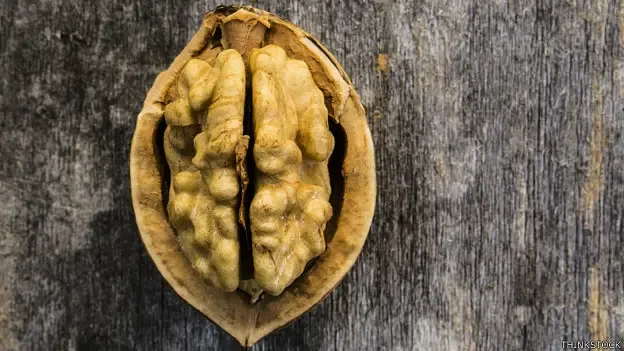
For centuries, much of Western medical thought was guided by an idea called the Doctrine of Signatures. The premise was simple: nature left visual clues about what each plant was for.
Walnuts, with their wrinkled interior resembling a brain, were prescribed for mental illness. Red fruits for the blood. Yellow bark for jaundice. Color, shape, texture — everything was read as a message.
The logic was coherent within its time. Without microscopes, without chemistry, without clinical trials, visual observation was the best available tool. The problem is that visual association is not evidence — and science would prove this centuries later.
What academic studies on the Doctrine of Signatures concluded is revealing: there is no historical evidence that the appearance of plants ever led to the discovery of their medicinal properties. Visual associations were, most of the time, attributions made after the discovery — memory aids for recalling what was already known, not tools for discovering what was not yet known.
It was a system for organizing and transmitting knowledge. Not for creating it.
What crossed generations without needing an explanation
While medieval Europe drew visual correspondences between plants and organs, other traditions built knowledge in a completely different way — not through the appearance of plants, but through clinical observation accumulated over centuries.
In the Andes, long before the arrival of Spanish colonizers, Andean medicine already contained a sophisticated understanding of disease symptoms and the properties of the plants used to treat them. The healers of the region — active for centuries before colonization, as documented by Peruvian anthropologist Lupe Camino — knew the cinchona tree as "the fever tree." Not as a metaphor. From experience.
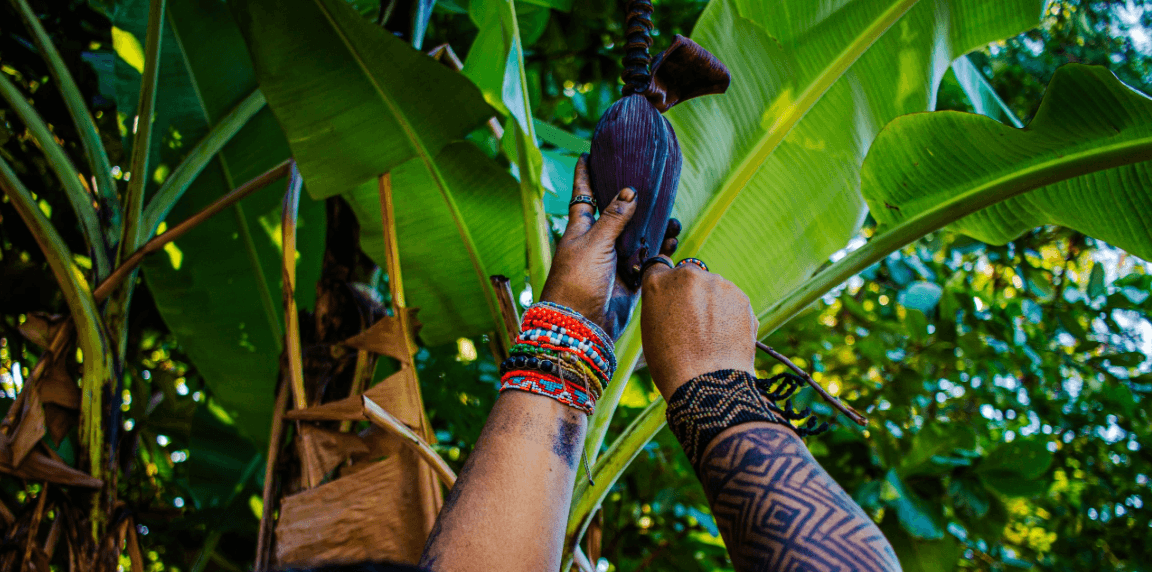
In India, the Ayurvedic system prescribed fruits like amla with a precision that is striking even today: dosage, time of day, combinations, and contraindications — built over more than three thousand years of practice. The banana blossom was used in medical traditions across Asia — in China for heart problems and diabetes, in India for diarrhea and inflammation — long before any pharmacological study existed to explain why. Science would later confirm the presence of flavonoids, antioxidants, and compounds with real anti-inflammatory action.
In Africa, recent ethnobotanical studies have documented complex repertoires of medicinal plants transmitted orally among communities in Limpopo, Ethiopia, and Nigeria, with a consistency that suggests not belief, but accumulated experience tested over time.
Indigenous peoples in Brazil used passion fruit to calm, guava to control diarrhea, and cashew for wound healing. This knowledge was not written down — it lived in the memory of communities, refined through the practice of countless generations.
Much was lost to colonization. But what survived carried, in many cases, a real efficacy — even without the language to explain it.
An extraction disguised as discovery
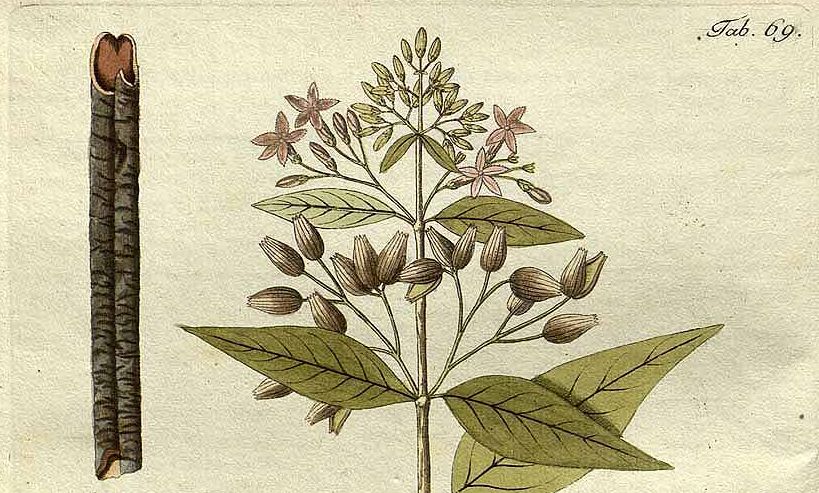
The globalization of knowledge about medicinal plants was not a gentle process of cultural exchange.
It was, in large part, plunder with a scientific name.
The story of cinchona makes this clear. The Quechua peoples of the Andes had been using its bark to treat fevers for centuries before any European set foot on that continent. When Spanish colonizers learned of it — from the indigenous healers themselves, who shared their knowledge with Jesuit missionaries — the plant was taken to Europe and presented as a Western discovery.
What the Europeans did with the bark was exactly what the indigenous peoples already did: they ground it up and dissolved it in water. No innovation. Only a transfer — without credit, without compensation, and without acknowledging that what existed there was a sophisticated medical system, not a primitive instinct.
This narrative was convenient and calculated. As geographer Robert Voeks analyzes, there was a recurring argument among colonial naturalists: that indigenous peoples discovered medicinal plants by instinct, like animals, and not through intelligence. A dehumanization that served a clear purpose — eliminating any obligation to recognize, compensate, or even credit those who held the knowledge.
The active compound in cinchona, quinine, would not be isolated until 1820 by two French chemists. The tree, meanwhile, was so heavily exploited that it is now endangered in Peru — where only a few dozen specimens remain in areas that once held thousands.
What science came to do — and what it did not
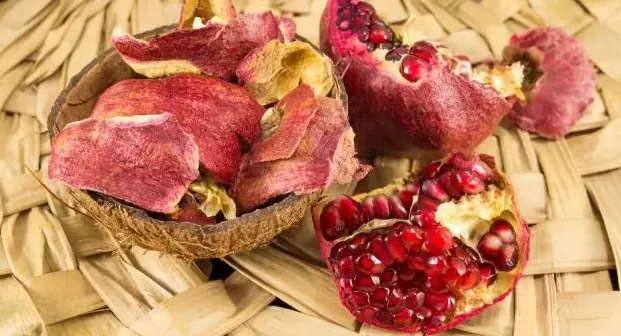
The turning point was not discovering that fruits and plants had medicinal properties. That had long been suspected. The turning point was creating a method to separate what worked from what was symbol, coincidence, or belief.
And the results were revealing — in both directions.
The pomegranate rind, used since antiquity against intestinal parasites, had its action confirmed in the laboratory — the alkaloids present help worms detach from the intestinal walls. The passion fruit that Brazilian indigenous peoples used to calm was proven to have anxiolytic action in clinical studies. The cinchona bark, which the Quechua knew as "the fever tree," yielded one of the most important antimalarials in the history of medicine.
But for every success, there were practices that did not survive scrutiny. Science did not come to confirm tradition — it came to test it. And that difference matters.
The problem is that only what was recorded can be tested. What lived exclusively in the memory of communities destroyed by colonization, forced migration, and cultural erasure is not waiting in any laboratory.
It simply no longer exists.
What remains to be discovered
This is not history from the past.
Today, indigenous and quilombola communities still hold knowledge about fruits and medicinal plants that has never been documented. Ethnobotany tries to record this knowledge before it is lost — not because everything it contains is correct, but because it may hold clues that science has not yet had the chance to investigate.
It is an unequal race. Every time an indigenous language dies, entire vocabularies of plant names, uses, and descriptions disappear with it. Every time an elder passes away without someone to receive what they know, a library that existed nowhere closes forever.
The WHO itself recognizes that the two systems — traditional and Western — need not oppose each other. What they need, above all, is honesty about how one reached the other.
Knowledge never belonged to anyone.
And perhaps that is exactly why it is still here.
References:
MANN, J. Murder, Magic and Medicine. Oxford University Press, 1992 · BENNETT, B. C. Doctrine of Signatures: An Explanation of Medicinal Plant Discovery or Dissemination of Knowledge? Economic Botany, 2007 · RATES, S. M. K. Plants as source of drugs. Toxicon, 2001 · KUMAR, K. P. S. et al. Traditional and medicinal uses of banana. Journal of Pharmacognosy and Phytochemistry, 2012 · ANHWANGE, B. A. et al. Banana inflorescence: Its bio-prospects as an ingredient for functional foods. Trends in Food Science & Technology, 2019 · VOEKS, R.; GREENE, S. The Colonial Quest for Medicinal Plants in the Torrid Zone. Geographical Review, 2018 · CRAWFORD, M. J. The Andean Wonder Drug: Cinchona Bark and Imperial Science in the Spanish Atlantic. University of Pittsburgh Press, 2016 · ELKADI, N. Cinchona: A Legacy of Extraction and Extirpation. JSTOR Daily, 2023 · POSEY, D. A. Cultural and Spiritual Values of Biodiversity. UNEP, 1999 · PLOTKIN, M. Tales of a Shaman's Apprentice. Viking, 1993 · SCHULTES, R. E.; RAFFAUF, R. The Healing Forest. Dioscorides Press, 1990 · REED, H. The Necessity of Moving from Biopiracy to Collaboration. Temple International & Comparative Law Journal, 2024 · PEI, S.; ALAN, H.; WANG, Y. Vital roles for ethnobotany in conservation and sustainable development. Plant Diversity, 2020.