Kombucha: How to Ferment Tea into a Living Drink
by Marcus Rodrigues
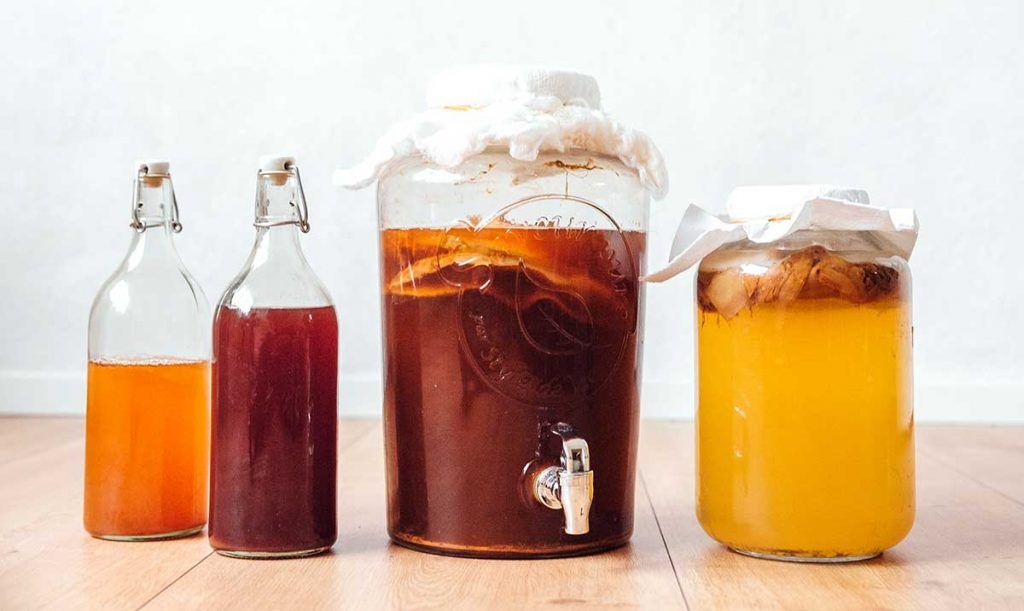
Kombucha: How to Ferment Tea into a Living Drink
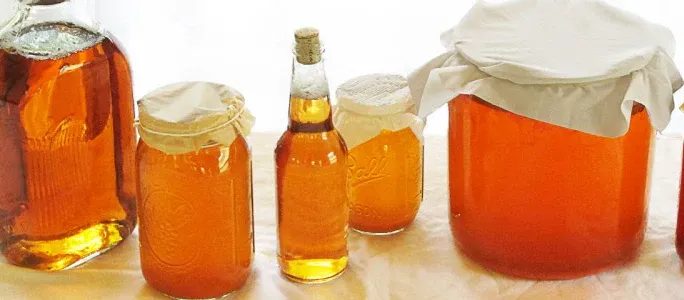
There’s something almost magical about turning tea, sugar, and time into a living beverage.
Kombucha has existed for centuries. It originated in China, traveled through Russia and Eastern Europe, and eventually spread around the world carrying a reputation that science has gradually begun to confirm: a fermentation rich in bioactive compounds, organic acids, and living microorganisms that make the drink interesting both in flavor and in function.
This passion fruit version brings a tropical tartness, intense aroma, and an incredibly refreshing result. But the most interesting thing about kombucha is exactly this: once you have the base ready, you can experiment with other fruits too. Hibiscus, ginger, strawberry, mango, pineapple, blackberry, apple, grape — every fruit changes the profile of the drink and opens space for creativity.
What Happens Inside the Jar
Fermentation isn’t magic. It’s biochemistry — and understanding it only makes the process more fascinating.
When the SCOBY comes into contact with sweetened tea, a layered transformation begins. Yeasts consume the sugar and produce alcohol. Then bacteria convert that alcohol into organic acids, mainly acetic acid and gluconic acid. That’s where kombucha gets its signature tangy flavor.
Over time, the pH drops and the environment becomes increasingly acidic. This acidity helps protect the beverage by inhibiting unwanted microorganisms.
During the second fermentation, with the bottle sealed, the carbon dioxide produced by the yeasts cannot escape. It dissolves into the liquid and creates the natural carbonation — the sensation that makes kombucha feel alive.
Passion fruit enters during this stage. Besides flavor and aroma, it provides additional sugars and compounds that intensify fermentation. The result changes from batch to batch because fermentation responds to temperature, timing, and environment. It is alive in the most literal sense.
What You’ll Need: SCOBY
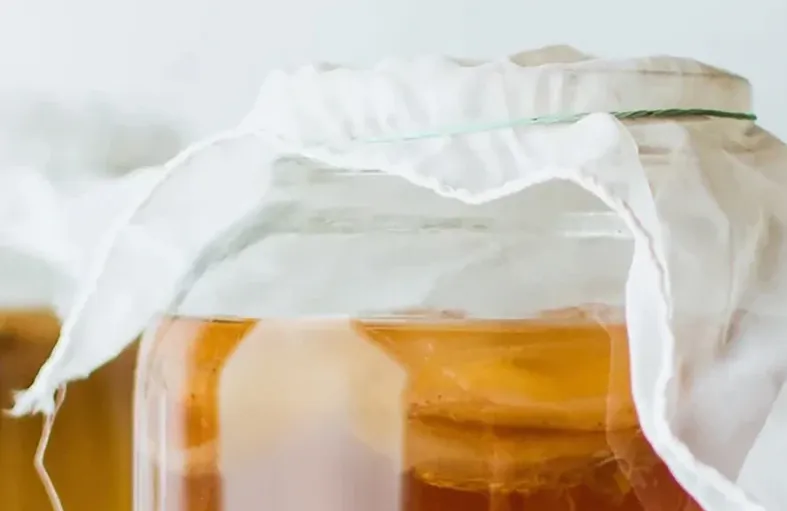
The SCOBY is the living culture responsible for making kombucha happen. Most people get one from someone who already brews kombucha, because every new batch creates a new layer that can be separated and shared.
People who ferment at home usually have extras and are happy to give them away. Try searching local fermentation groups, organic markets, natural food stores, or local kombucha communities online.
If you can’t find one nearby, there’s another option: use an unpasteurized raw kombucha as a starter liquid. With enough time and the right conditions, a new SCOBY can form naturally.
Ingredients
For the first fermentation:
- 2 liters filtered water
- 4 tablespoons black tea or green tea
- 1 cup white sugar (200 g)
- 1 SCOBY
- 200 ml already brewed kombucha (starter liquid)
For second fermentation (With/ passion fruit):
- Kombucha from the first fermentation
- Pulp of 3 passion fruits
- 1 teaspoon sugar per bottle (optional, for extra carbonation)
How to Make It
First fermentation — building the base
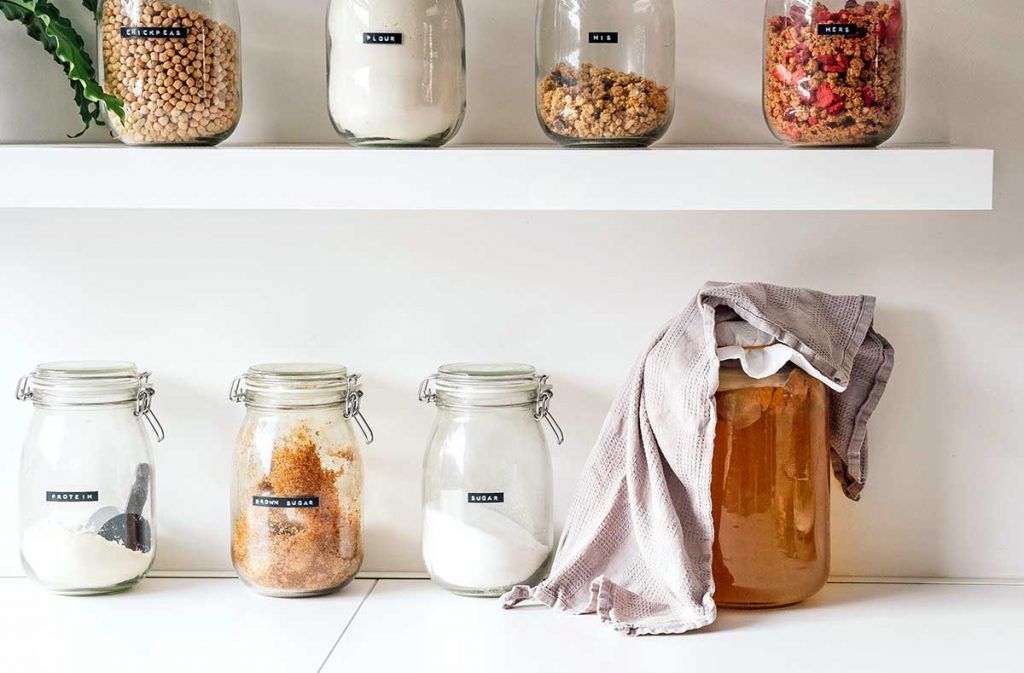
Boil the water and steep the tea for about 10 minutes. Strain, dissolve the sugar while the tea is still hot, and let it cool completely. The SCOBY cannot handle heat.
Once the tea reaches room temperature, transfer it to a large glass jar. Add the starter liquid and the SCOBY using clean hands. Cover the jar with a clean cloth secured with a rubber band so it can breathe while staying protected from insects.
Let it ferment for 7 to 14 days in a dark, ventilated place away from direct sunlight. Start tasting around day 7. The longer it ferments, the more acidic and less sweet it becomes.
Second fermentation — where the passion fruit comes in
Remove the SCOBY and reserve it with some liquid for the next batch. Mix the passion fruit pulp into the kombucha and pour into airtight bottles. If you want more carbonation, add a small pinch of sugar to each bottle.
Leave at room temperature for 2 to 3 days, opening carefully once a day to release pressure. Then refrigerate.
Serve cold.
How to Experiment with Flavors
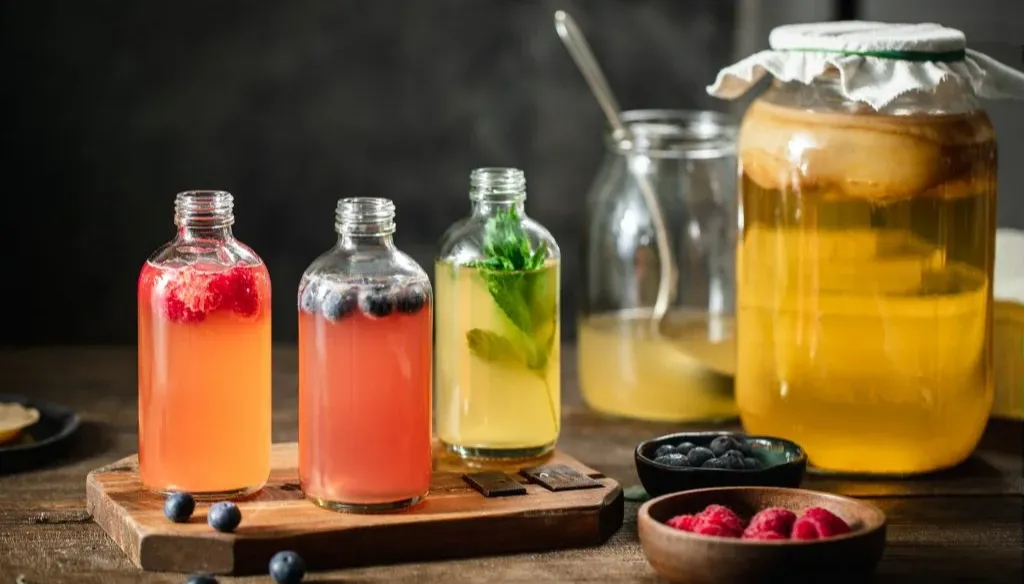
Kombucha works as an incredible base for fruit experimentation.
Passion fruit gives brightness and acidity, while other fruits completely change the experience:
- Pineapple creates a more tropical and intense flavor
- Strawberry adds delicate aroma and color
- Mango brings sweetness and body
- Ginger adds spice and depth
- Blackberry creates a darker, more complex profile
The fun part is testing combinations. Every fruit interacts differently with fermentation, and every batch becomes a new discovery.
To Remember
Kombucha doesn’t like rushing. Every batch changes depending on the temperature, the SCOBY, the timing, and the fruit you choose. Part of the beauty is learning the rhythm of fermentation as it happens.
📍 And if you find passion fruit, hibiscus, or any fruit in abundance nearby, mark it on the Fruit Map. There’s always someone looking to turn fresh fruit into something alive.
A living drink, made with time and intention.
The more you ferment, the more you realize that patience is also an ingredient.
References:
JAYABALAN, R. et al. A Review on Kombucha Tea — Microbiology, Composition, Fermentation, Beneficial Effects, Toxicity, and Tea Fungus. Comprehensive Reviews in Food Science and Food Safety, 2014.
NEFFE-SKOCIŃSKA, K. et al. Amino acid profile and biological activities of kombucha beverages. Nutrients, 2022.
VILLARREAL-SOTO, S. A. et al. Understanding Kombucha Tea Fermentation: A Review. Journal of Food Science, 2018.